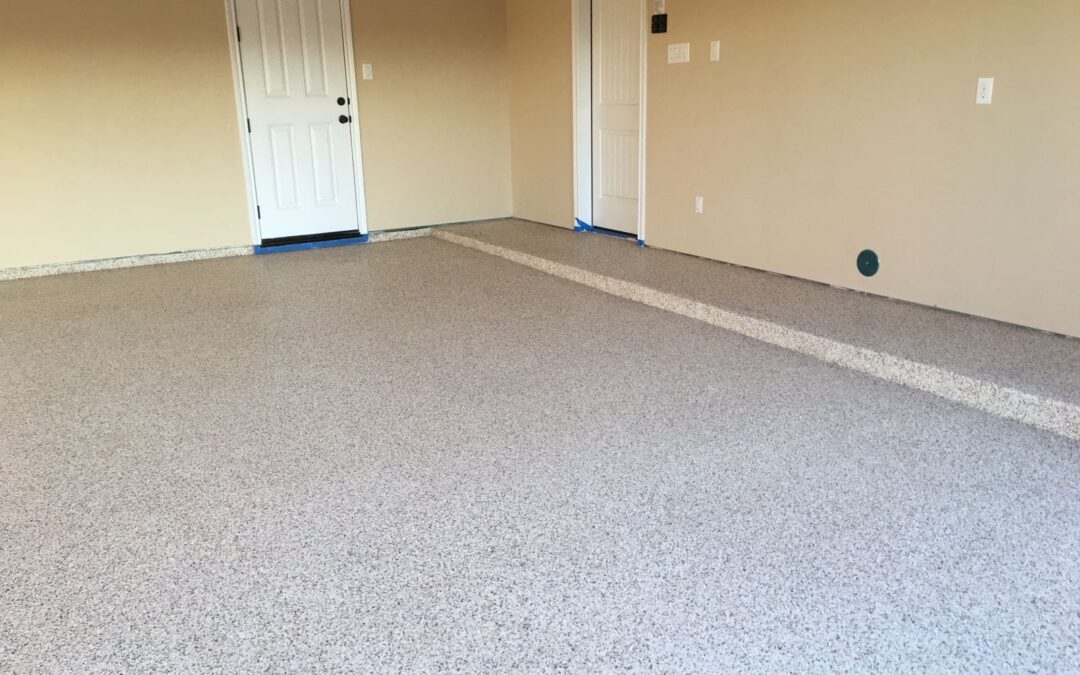
Most homeowners assume epoxy coating is the hard part. In reality, the coating is the easy part — what happens before it goes down determines whether your floor lasts 20 years or starts peeling in two.
Every floor starts with an aggressive grind
Before any epoxy touches your concrete, we grind the entire surface with diamond cutting tools. This step does two things: it opens the concrete’s pores so the epoxy can properly bond, and it levels out imperfections in the slab.
Some floors are easier than others. A smooth-troweled slab needs a standard grind. But floors with a broom finish — the textured, sidewalk-like surface some builders use — require a much more aggressive pass to level out. That extra labor and diamond-cutter wear is one of the biggest reasons two garages of the same size can have different price quotes: it’s not the epoxy, it’s what the concrete demands.
What proper prep prevents
Skipping or rushing this step is the #1 cause of the failures we get called out to fix — peeling, bubbling, and delamination within a year or two. This is especially true here in the Houston area, where humidity makes a proper moisture vapor test and thorough grind essential, not optional. We see this failure pattern often on North Houston slabs — Spring, Tomball, The Woodlands, Conroe — where builders didn’t account for ground moisture during original construction.
The transformation
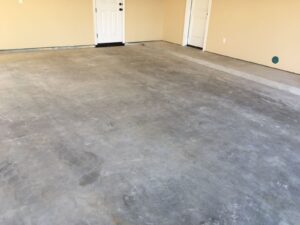
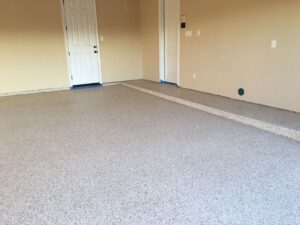
Once the surface is properly prepped, the difference is dramatic. What started as a rough, uneven slab becomes a smooth, durable, showroom-quality floor.